Half the shops I rang in Denver heard the word Gaggenau and gave me somebody else's phone number. This one sent a technician who already knew the steam generator, found it caked with mineral scale from our water, and had it cleared and running by late that afternoon. I had braced myself for a fortnight of waiting on a part and instead it was one visit.
Theodore Kasprzak Glendale Specialists
Glendale Wine Cooler Repair, Done Right the First Time
Precise temperature and humidity fixes for the wine coolers packed into Glendale's condos and townhomes along the Cherry Creek greenbelt.
Small Footprint, Big Failure Points
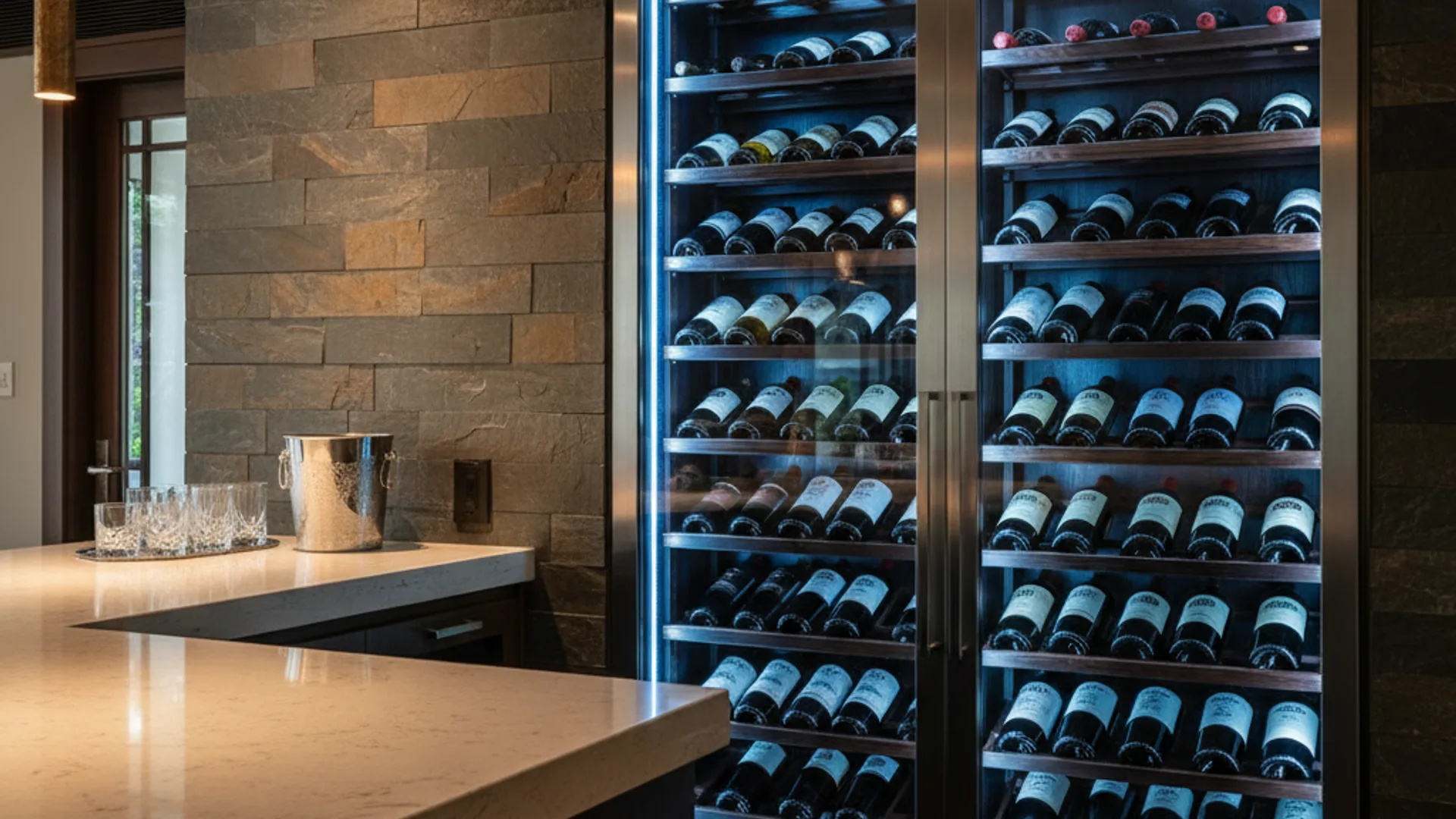
Glendale is a compact town wrapped almost entirely by Denver, and its housing stock reflects that density: mid-rise condos, stacked townhomes, and remodeled kitchens where a wine cooler is squeezed under a counter or built into a wall of cabinetry along the Cherry Creek greenbelt. That tight installation is exactly what stresses these units. Compressor-based coolers need airflow behind the cabinet to reject heat; thermoelectric models need a stable ambient temperature to hold their set point. Neither gets much room to breathe in a 900-square-foot unit.
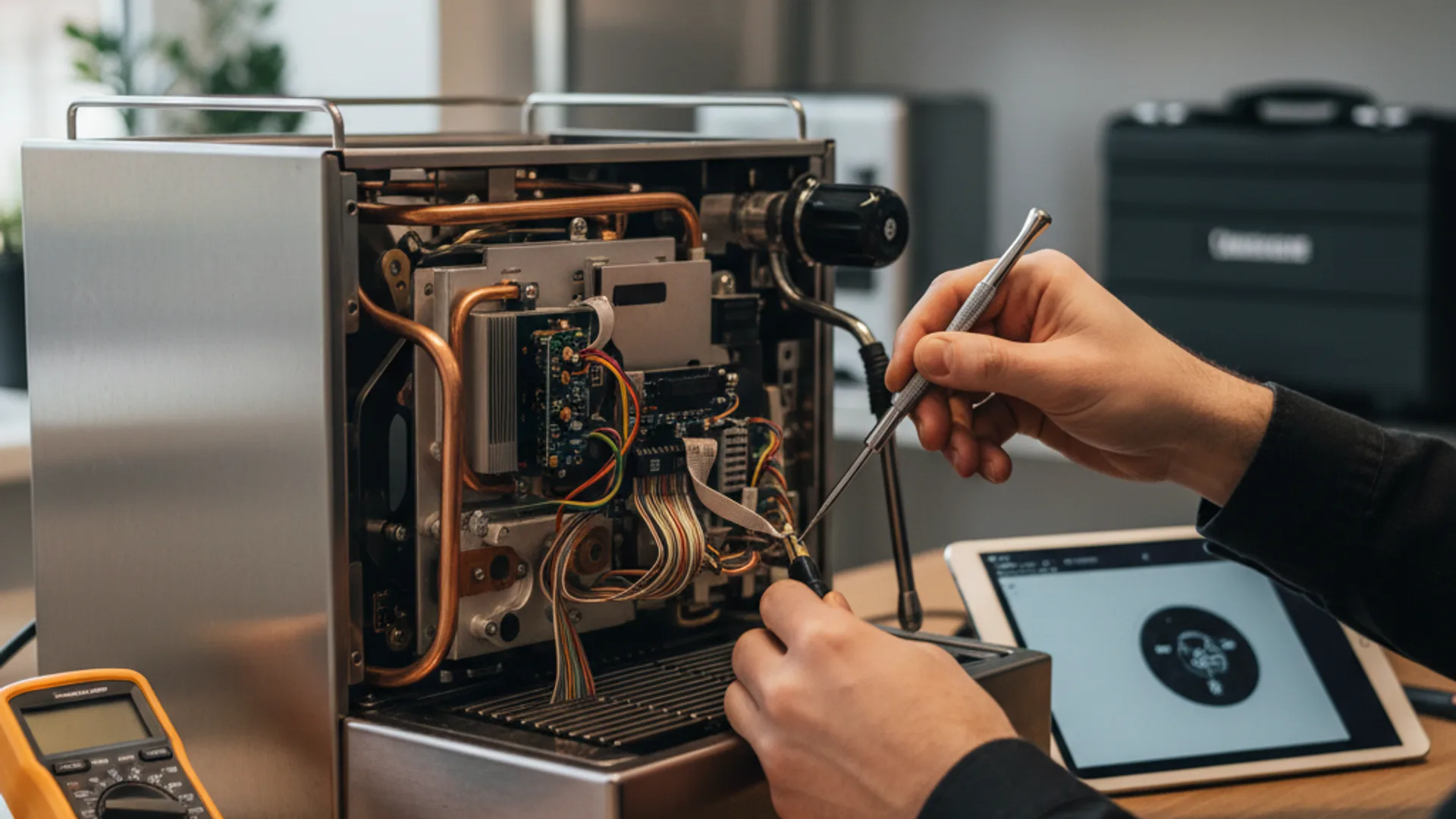
We see the same pattern call after call: a dual-zone unit holding the red wine side fine but drifting warm on the white side, or a compressor that short-cycles because the vent gap behind the cabinet got sealed up during a kitchen remodel. Our technicians carry both thermoelectric control boards and compressor-system parts, because guessing which platform is inside your cabinet before we arrive wastes everyone's time.
The Faults We Chase Down Most in Glendale
Three symptoms account for the bulk of our Glendale wine cooler calls.
One Zone Runs Warm, One Runs Fine
Dual-zone units have separate evaporators or thermoelectric plates feeding each compartment. A failed sensor, a stuck damper, or a cracked seal on one door will let a single zone drift while the other holds steady — a classic sign the fault is isolated, not systemic.Humidity Swings and Cork Damage
Wine needs 50–70% relative humidity to keep corks from drying and shrinking. A worn door gasket, an iced-over evaporator, or a failing humidity sensor lets moisture escape faster than the unit can replace it — and you won't notice until a cork starts crumbling.Buzzing, Rattling, or Loud Cycling
Thermoelectric units hum quietly by design; if yours has started buzzing or rattling, a fan blade, mounting bracket, or thermoelectric module is usually to blame. Compressor units that cycle loudly and often typically have a refrigerant or start-relay problem, not just age.Thermoelectric or Compressor — We Diagnose Both Correctly
The two platforms fail differently, and treating them the same is how misdiagnoses happen.
Thermoelectric wine coolers use a Peltier module rather than a refrigerant loop, which makes them nearly silent and vibration-free — ideal for a wine wall visible from an open-concept living room. Their limitation is thermal range: they struggle to hold a set point much below the surrounding room temperature, so a unit installed near a sunny window or a heat-producing appliance in a smaller Glendale kitchen will underperform no matter how new it is. We check ambient conditions before condemning the module itself.
Compressor-based coolers behave more like a scaled-down refrigerator, capable of holding a firmer, lower temperature and recovering faster after the door opens for a dinner party. They also carry more moving parts that wear: start relays, fan motors, and refrigerant charge. When a compressor unit runs constantly without reaching temperature, we check for a low charge or a failing condenser fan before assuming the compressor itself is bad, since replacing a compressor unnecessarily is a needless expense for the homeowner.
Vibration matters more with wine coolers than almost any other appliance in the house — resting wine bottles on a shelf that shakes with every compressor cycle can disturb sediment and, over years, affect how the wine ages. Part of our diagnostic includes checking mounting hardware, fan balance, and shelf isolation, not just the cooling system.
We've opened Glendale wine coolers where the real problem was three feet of blocked ventilation behind the cabinet, not the compressor everyone assumed had failed.
— a Cherry Creek Appliance Repair technician
Signs Your Wine Cooler Needs a Technician
Book service before any of these turn a small fix into a full replacement.
- One zone reads several degrees warmer than the other on a dual-zone unit
- Corks feel dry, brittle, or are shrinking away from the bottle neck
- Compressor cycles on and off more frequently than it used to
- New buzzing, rattling, or vibration you can feel through the cabinet
- Interior light stays on constantly or won't turn on at all
- Digital display shows an error code or won't hold a set temperature
- Condensation building up on the glass door or pooling inside the cabinet
- Unit runs constantly but never reaches the set temperature
Quick Answers
Who repairs wine coolers in Glendale, Denver?
Sub-Zero Cherry Creek Appliance Repair services Glendale's condos and townhomes with technicians trained on both thermoelectric and compressor-based wine cooler systems. We are an independent repair company using OEM-quality, factory-spec parts and are not affiliated with any single manufacturer.
How fast can you reach Glendale for wine cooler repair?
Glendale sits inside our core Cherry Creek service radius, so most calls get a technician on-site the same day, with service visits running daily from 8 AM to 6 PM. The phone line is answered 24/7 at (720) 649-6641 to get you on the schedule.
What local conditions affect wine coolers in Glendale?
Glendale's dense residential layout means many wine coolers are built into tight cabinetry with limited rear ventilation, causing compressor units to overheat or short-cycle. Smaller kitchens with more ambient heat also make it harder for thermoelectric units to hold their set point.
Frequently Asked Questions
What does a wine cooler repair visit cost in Glendale?
Diagnostics start at a flat $89 service-call fee, which is credited toward the repair if you move forward. Wine cooler repairs typically start around $139, but the final quote depends on what our technician finds once the unit is opened up — we always price after diagnostics, not before.
How do I book a wine cooler repair appointment?
Booking is entirely online through our Book Online scheduler, or you can call (720) 649-6641, which is answered 24/7. Service visits themselves run daily from 8 AM to 6 PM.
Do you use authorized parts, and is there a warranty on the repair?
We are an independent appliance repair company, not authorized or affiliated with any manufacturer, and we use OEM-quality, factory-spec parts on every job. Our repairs are backed by a workmanship warranty that our technician will detail on-site for your specific unit.
Can you fix a wine cooler that's still under a manufacturer warranty?
Because we operate independently rather than as a factory-authorized service center, we recommend checking your warranty terms first if the unit is still covered. For anything out of warranty or where you'd rather avoid the wait for an authorized appointment, we can typically diagnose and repair it directly.
Why is my wine cooler louder than it used to be?
A sudden increase in noise usually points to a worn fan bearing, a loose mounting bracket, or, on compressor units, a start relay or refrigerant issue causing harder cycling. Left unaddressed, the added vibration can also disturb bottles resting on interior shelves over time.
Ready to Get Your Appliance Fixed?
Call us any time; the line is answered 24/7. Or book a visit online in under a minute. Service visits run daily, 8 AM to 6 PM.
Reviews
What Cherry Creek Homeowners Say
4.9
4.9 out of 5 — based on 168 customer reviews
Rated 4.9 out of 5 stars, based on 168 customer reviews.
Our house off Country Club dates to the 1920s and the refrigerated drawers are wedged into original cabinetry with about an inch of clearance either side. He pulled the unit, replaced a dead thermistor and put the whole thing back without leaving a scuff on the woodwork, which was honestly the part I was most nervous about. The drawers have sat at 38 degrees ever since.
Ingrid MalinowskiWhat won me over was that he actually opened the cooktop up. The whole right side had gone unresponsive and I had already been told elsewhere that induction glass is not really serviceable and I should budget for a new one. It was a ribbon cable to the touch controls, and the bill was a small fraction of a replacement.
Rafael QuintanillaRan the self-clean cycle overnight and woke up to an oven with no power to it whatsoever. A blown thermal fuse, replaced without any drama — but the genuinely useful bit was the few minutes he spent explaining why that cycle cooks those fuses in the first place and what to do instead. Fifteen years of owning ovens and nobody had ever mentioned it.
Beatrix NyongoThe 500 series has been in this kitchen for thirty years and I fully expected to be told its time was up. Instead he tracked down where it was losing refrigerant, brazed the leak, recharged it, and gave me a frank rundown of which parts are still obtainable if something else lets go. It is holding temperature the way it did a decade ago.
Sullivan ReidyFour stars, and the missing one is entirely about scheduling. The door seal on our wine column had gone and the glass fogged over every evening; our appointment was pushed back twice, the second time the day before, so we took time off work for nothing. The technician who eventually came was excellent — showed me exactly where the seal had deformed, replaced it, and the glass has stayed clear since. Good work, frustrating run-up to it.
Harriet Ferreira